 how-to
How Ethiopian Diaspora Engagement Strengthens National Unity
Table of Contents
- Why Ethiopian Diaspora Engagement Matters for National Unity
- Understanding the Current State of Diaspora Participation
- Ethiopian Diaspora National Dialogue: Pathways to Agenda-Setting
- Ethiopian Diaspora Peacebuilding and Conflict Prevention
- Ethiopian Diaspora Reconciliation: Bridging Community Divisions
- Ethiopian Diaspora Community Organizations: Building Networks for Change
- Practical Steps for Meaningful Diaspora Engagement
- Measuring Whether Engagement Strengthens Unity
- Frequently Asked Questions
Last Updated: October 11, 2026
Why Ethiopian Diaspora Engagement Matters for National Unity
Ethiopian diaspora engagement shapes how millions of Ethiopians abroad contribute to their homeland's progress. When diaspora members participate meaningfully in national dialogue and peacebuilding, they strengthen social cohesion across ethnic and political lines. According to research from the International Organization for Migration, 56% of diaspora respondents had sent remittances annually to friends or family in Ethiopia during the previous three years, demonstrating sustained connection to home. This financial commitment reflects deeper ties, ties that extend beyond money into cultural identity, political advocacy, and conflict prevention.
Ethiopian diaspora engagement in national unity requires structured participation in dialogue forums, informed peacebuilding efforts, and accountability to prevent polarization. Diaspora communities hold significant influence over international narratives about Ethiopia, yet internal divisions within the diaspora itself can undermine unity efforts.
Understanding the Current State of Diaspora Participation
Diaspora participation in Ethiopia's national dialogue has expanded, though it remains uneven across ethnic groups, regions, and generations. Second-generation diaspora members often lack language skills or cultural context; older members may carry historical grievances that complicate bridge-building.
Research from the Wilson Center on diaspora peacebuilding shows that realizing the diaspora's peacebuilding potential requires bridging rifts among diaspora subgroups and addressing related challenges. This means diaspora organizations must actively recruit across ethnic lines, not just serve their own communities.
The digital dimension adds complexity. A 2026 SAGE Open study examined how the Ethiopian government and diaspora communities use digital platforms to shape diplomatic narratives, including for political advocacy and economic development. Social media amplifies both connection and division. Misinformation spreads rapidly.
Ethiopian Diaspora National Dialogue: Pathways to Agenda-Setting
The national dialogue offers structured participation in consensus-building around core national issues, with diaspora delegates attending consultations alongside domestic participants.
Formal Dialogue Channels and Institutions
The Ministry of Foreign Affairs maintains a Diaspora Engagement Directorate coordinating diaspora input on foreign policy, investment, and peacebuilding. The National Dialogue Commission includes diaspora representation in working groups on constitutional reform, federalism, and reconciliation.
These forums operate on defined timelines, with diaspora participants submitting position papers and voting on consensus positions that feed into government policy recommendations.
Access varies significantly. Diaspora members with professional networks, language fluency, and financial resources participate more readily. Second-generation diaspora members, women, and members from smaller ethnic groups are underrepresented. Organizations brokering participation often serve as gatekeepers, shaping whose voices reach the dialogue.
Agenda-Setting Power and Its Limits
Diaspora participants with research, data, and grassroots community input carry real influence in shaping dialogue priorities.
Diaspora organizations submit briefs proposing topics and solutions, participate in working group meetings, and coordinate across organizations to amplify positions.
Diaspora agenda-setting power has limits. The government retains final authority, and diaspora input on economic development is incorporated more readily than input on sensitive political issues. Diaspora members must accept that influence is not control.
Practical Barriers and Solutions
Barriers to participation include travel costs ($800-$1,500), language barriers, time zone differences, and work/childcare responsibilities.
Virtual participation has expanded access, though recorded sessions miss real-time discussion. Hybrid models improve access but require robust infrastructure and skilled facilitation.
Organizations have developed targeted strategies: travel subsidies, language workshops, time-zone-friendly coordination, and briefings for in-person delegates. These measurably increase participation breadth.
Building Diaspora Consensus Before the Dialogue
Diaspora participants carry more influence when they arrive with internal consensus, requiring pre-dialogue consultations where communities discuss priorities and develop shared positions.
Internal consensus-building, through listening sessions, surveys, and focus groups, produces delegates who credibly represent diaspora communities.
Inclusive consensus-building requires intentional effort to surface dissenting views and prevent privileging majority voices.
Ethiopian Diaspora Peacebuilding and Conflict Prevention
Ethiopian diaspora peacebuilding operates on a simple principle: diaspora members can either amplify conflict or help prevent it through inclusive conversation and conflict-sensitive engagement.
Peacebuilding starts with recognizing diaspora divisions that mirror Ethiopia's ethnic and political fragmentation. Unaddressed, these divisions replicate Ethiopia's conflicts abroad and undermine diaspora credibility.
Effective peacebuilding requires diaspora forums to include multiple ethnic groups, political perspectives, and generations, addressing historical grievances without blame.
Ethiopian Diaspora Reconciliation: Bridging Community Divisions
Reconciliation within diaspora communities precedes meaningful national engagement. If diaspora members cannot talk across ethnic or political lines, they cannot credibly advocate for national reconciliation.
Reconciliation requires acknowledging harm, apology, and commitment to change. Quick forgiveness without acknowledgment breeds resentment.
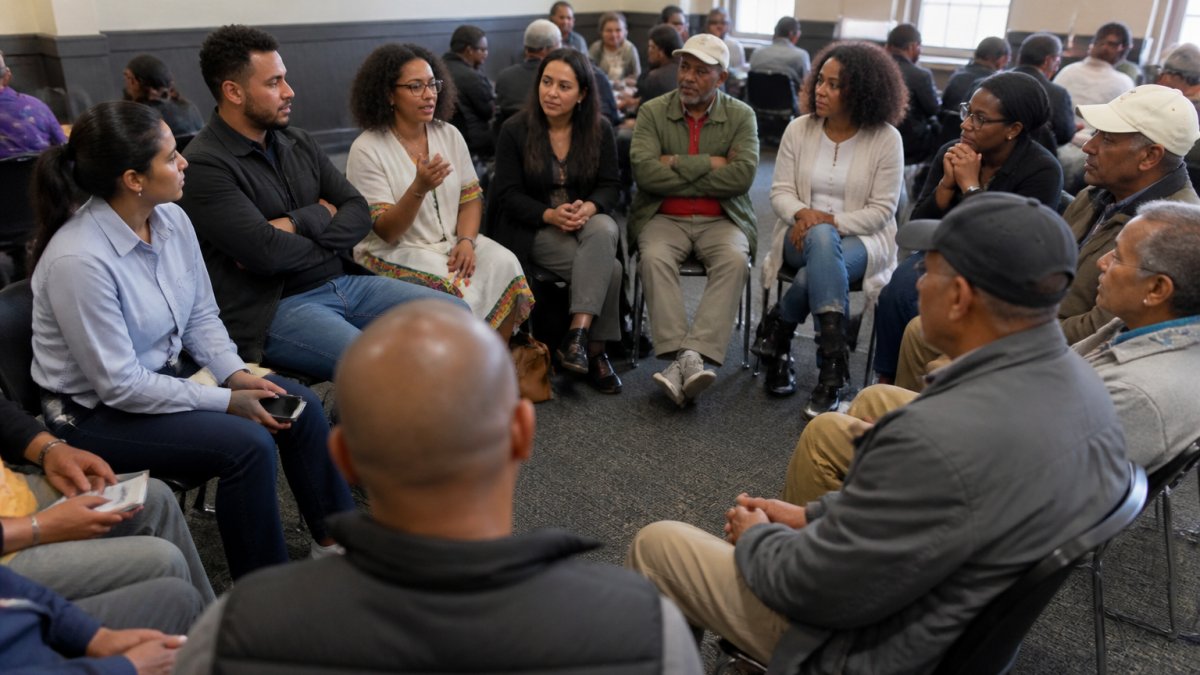
Practical tools include facilitated dialogue circles, listening sessions, and joint projects. Working together on community development builds trust and practices unity.
Ethiopian Diaspora Community Organizations: Building Networks for Change
Community organizations translate individual commitment into collective action, providing structure for dialogue and advocacy. Yet they often operate in silos, serving single ethnic or regional communities.
Network-building amplifies impact. Coordinating diaspora organizations can jointly advocate, co-sponsor forums, share resources, and model inclusive engagement.
Building networks requires trust, transparency about funding and decision-making, regular communication, and accountability.
Practical Steps for Meaningful Diaspora Engagement
Meaningful engagement requires active participation in structured forums, informed decision-making, and conflict-sensitive engagement.
Verify Information Before Sharing
Before sharing news about Ethiopia, verify the source. Check whether the story comes from a credible outlet, has been reported by multiple independent sources, and whether the outlet has a track record of accuracy.
Red flags include sensational headlines, stories blaming entire ethnic groups, claims without sources, rapid spread without mainstream coverage, and content circulating only within one diaspora subgroup. Share less, verify more, your credibility depends on it.
Participate in Structured Dialogue Forums
Structured forums have trained facilitators, ground rules preventing personal attacks, and space for listening. Look for forums with multiple ethnic/political backgrounds, clear agendas, trained facilitators, public outcomes, and follow-up action. Participate regularly, sustained engagement builds more impact than one-time attendance.
Support Economic Development and Investment
Economic development creates shared interests that transcend political division. Before investing, research the business model, management, track record, community benefits, and environmental/social concerns. Small investments in cooperative funds, microfinance, or partnerships create economic ties that strengthen unity.
Engage Across Ethnic and Political Lines
Start small: attend cultural events, participate in joint service projects, join diverse dialogue forums. Build relationships before contentious topics. Engagement requires humility, your goal is not to eliminate disagreement but to prevent it from becoming dehumanization.
Measuring Whether Engagement Strengthens Unity
Impact measurement matters. Without it, diaspora engagement becomes activity without accountability. Yet measuring whether engagement strengthens unity is methodologically challenging because unity is abstract and causation is difficult to isolate.
Defining Measurable Indicators at Multiple Levels
Individual level: Track diaspora member behavior and attitudes through: information consumption (percentage consulting three+ independent news sources weekly), cross-community interaction (attendance at joint events, targeting 30% annually), attitude shifts (pre/post surveys measuring understanding and hopefulness), and social network diversity (relationships across ethnic/political lines).
Community organization level: Track cross-ethnic coordination (joint projects and partnerships), participation diversity (no single group >50%), dialogue outcomes (completed projects), and funding transparency (annual reports, donor disclosure, decision-making explanation).
National-level indicators: These are harder to measure but essential. Specific metrics include:
- Diaspora influence on dialogue agendas: Document which diaspora-proposed topics are adopted by the national dialogue. If diaspora organizations propose 10 agenda items and three are adopted, that is a 30% adoption rate. Track this over multiple dialogue rounds to see whether diaspora influence increases.
- Diaspora-supported peacebuilding outcomes: Identify specific peacebuilding initiatives that diaspora members fund or lead (e.g., a dialogue forum in a conflict-affected region, a joint economic development project across ethnic lines). Measure whether these initiatives reduce reported tensions, increase cross-community cooperation, or improve service delivery. This requires baseline data before the initiative launches and follow-up data 6-12 months after.
- Conflict indicator trends: Partner with research organizations to track conflict indicators over time, reported incidents of ethnic violence, inflammatory rhetoric in media, political polarization scores. Diaspora engagement alone does not drive these trends, but diaspora contributions should be visible in the data. If conflict indicators are declining in regions where diaspora-supported peacebuilding is active and rising in regions where it is absent, that suggests diaspora impact.
- Economic ties across regions: Track diaspora investment flows across ethnic and regional lines. If diaspora members are investing only in businesses owned by their own ethnic group, diaspora investment is reinforcing division. If diaspora investment is flowing across ethnic lines, it is creating economic interdependence that supports unity. Data on diaspora remittances and investment by recipient ethnicity and region can show this pattern.
Establishing Baselines and Targets
Measurement requires starting points. Before launching a diaspora engagement initiative, collect baseline data. What percentage of diaspora members currently participate in dialogue forums? How many diaspora organizations exist, and how many are coordinating? What do diaspora members currently know about Ethiopian current events?
Baseline data can come from surveys, focus groups, network mapping, and document review. A simple online survey of 200-300 diaspora members takes two weeks and costs little. A network analysis mapping which diaspora organizations coordinate takes one week. These baselines establish the starting point.
Then set realistic targets. If baseline data shows that 5% of diaspora members participate in structured dialogue forums, a target of 15% participation after 18 months is ambitious but achievable.
Tracking Progress and Adjusting Strategy
Measurement is not a one-time event. Collect data quarterly or semi-annually to track progress toward targets. If progress is slower than expected, investigate why. Are barriers to participation preventing people from engaging? Are diaspora organizations lacking resources or skills to coordinate? Is misinformation undermining trust? Adjust strategy based on what the data reveals.
For example, if survey data shows that diaspora members trust information from diaspora media more than mainstream outlets, a strategy focused on promoting mainstream news consumption may fail. Instead, partner with diaspora media to improve their fact-checking and source verification. Let the data guide strategy.
The Hardest Measurement: Does Engagement Actually Strengthen Unity?
The hardest measurement is whether engagement actually strengthens national unity. This requires tracking conflict indicators over time and attributing changes to diaspora engagement, a difficult causal claim. Are ethnic tensions decreasing? Are political opponents engaging in dialogue rather than escalation? Are institutions functioning better?
A rigorous approach requires comparison. Measure conflict indicators in regions where diaspora-supported peacebuilding is active and in regions where it is absent. If conflict indicators improve more in regions with diaspora engagement, that suggests diaspora impact. This requires partnership with research organizations and sustained funding over multiple years.
For most diaspora organizations, this level of rigor is not feasible. Instead, focus on intermediate outcomes: Are diaspora members more informed? Are they interacting across ethnic lines? Are they supporting economic development? Are diaspora organizations coordinating?
Frequently Asked Questions
How can the Ethiopian diaspora contribute to national unity?
The Ethiopian diaspora contributes through multiple channels: participating in national dialogue to set agendas and build consensus, investing in economic development projects, supporting peacebuilding initiatives, and amplifying accurate information to counter misinformation. According to the International Organization for Migration, 56% of diaspora respondents had sent remittances annually to friends or family in Ethiopia during the preceding three years, demonstrating sustained economic engagement. Diaspora members also strengthen cultural identity and national pride, which reinforces social cohesion.
What role can Ethiopian diaspora community organizations play in peacebuilding?
Ethiopian diaspora community organizations serve as platforms for dialogue across ethnic and political lines, facilitate reconciliation efforts, and bridge divisions within diaspora subgroups. According to the Wilson Center, realizing the diaspora's peacebuilding contribution requires bridging rifts among diaspora subgroups and addressing related challenges. These organizations can host structured forums, support conflict-prevention education, and mobilize resources for social cohesion initiatives. They also connect diaspora members to homeland institutions and foster partnerships that strengthen national progress.
How can Ethiopians abroad participate in national dialogue without reinforcing divisions?
Conflict-sensitive engagement requires verifying information before sharing, listening across ethnic and political differences, and supporting inclusive platforms that represent diverse communities. Diaspora members should seek out dialogue forums that explicitly address polarization, avoid amplifying unverified claims, and engage with organizations committed to reconciliation. Participating in structured dialogues, rather than unmoderated social media discussions, reduces the risk of reinforcing divisions. Supporting peacebuilding organizations and fact-based media outlets strengthens the quality of diaspora participation.
What challenges limit diaspora engagement in national unity efforts?
Key barriers include divisions within diaspora communities themselves, misinformation on digital platforms, limited access to reliable information, and geographic distance from homeland institutions. According to research on digital diaspora diplomacy, the Ethiopian government and diaspora communities use digital platforms to shape diplomatic narratives, but these same platforms can spread unverified claims. Time zone differences, language barriers for second-generation diaspora, and competing political affiliations also constrain participation. Addressing these challenges requires investment in trusted media, structured dialogue platforms, and inclusive community organizations.